A Guide to Real Estate Software Development for Non-Technical Users
It should come as no surprise that the real estate sector has embraced technology in a time when it has impacted nearly every area of our lives. The term “real estate software development” describes the process of developing and deploying software specifically designed to meet the demands of the real estate industry. This article will discuss the value of technology in the real estate sector and the various advantages it offers to brokers and brokerages.
- A Guide to Real Estate Software Development for Non-Technical Users
- Benefits of Real Estate Software Solutions
- What’s in the Real Estate Business Software for the Home Buyers?
- Trends in Real Estate Software Development
- Mobile apps and mobility
- Virtual and augmented reality (VR/AR)
- Artificial intelligence (AI) and machine learning
- Blockchain for transactions
- Data security and privacy
- Predictive analytics for pricing
- Property management software integration
- Sustainability and green Real Estate
- Marketplace platforms
- Collaborative tools and workflow management
- XR Studios expertise
Benefits of Real Estate Software Solutions
Real estate software development has the ability to drastically alter the market by improving customer satisfaction, eliminating redundancies in operations, and utilising data analytics.
Streamlining processes
Process simplification is one of the main advantages of real estate software development. Real estate businesses benefit greatly from automation, which makes work like listing properties, managing documents, handling transactions, and communicating with clients much easier. Real estate agents can efficiently handle leads, monitor interactions, automate workflows, and simplify their repetitive activities by integrating Customer Relationship Management (CRM) solutions.
Enhanced customer experience
The advancement of real estate software greatly improves the clientele’s experience. Clients find it easier to examine properties when virtual tours and property search tools are user-friendly. Potential tenants or buyers can keep informed with real-time updates on the availability and price of the property, and the incorporation of online payment systems streamlines transactions for greater convenience for all stakeholders.
Data analysis and insights
Data is frequently called the “new gold,” and real estate software development successfully utilises its potential. Data collection and analysis on market trends and property performance are made possible by these solutions. Real estate agents may price properties competitively, foresee future trends, and reduce project risks by using predictive analytics to make more informed judgements. Additionally, monitoring and evaluating marketing initiatives yields insightful data that can be used to better target marketing campaigns, maximise marketing budgets, and increase return on investment.
What’s in the Real Estate Business Software for the Home Buyers?
The goal of real estate software solutions for purchasers is to streamline the process of purchasing a property, or property management. They improve the entire experience and offer helpful information. Homebuyers might anticipate the following main attributes and advantages from real estate management software:
Property search
Homebuyers can look for properties based on their own criteria, including location, price range, type of property, number of bedrooms, and more, thanks to real estate software development. Users can select properties that fit their preferences with the aid of advanced search criteria.
Interactive property listings
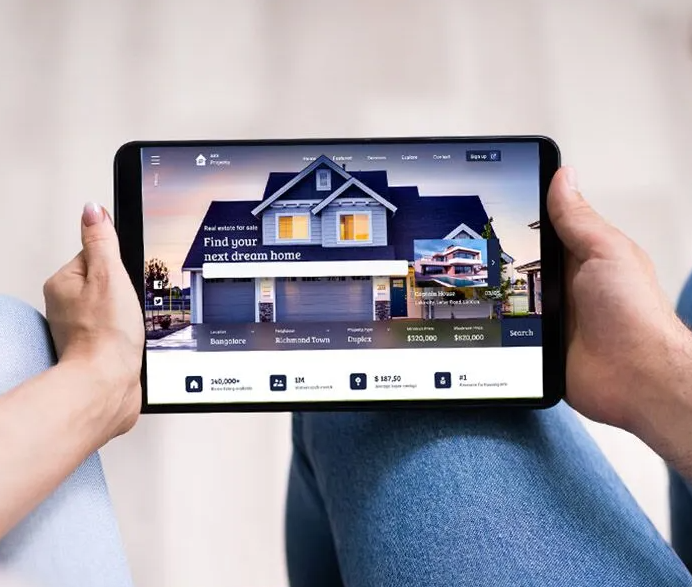
Listings frequently feature excellent photos, virtual tours, and thorough property descriptions. With the help of this visual content, prospective homeowners can receive a thorough overview of a house without ever having to go there.
Real-Time updates
Real-time information on new listings, price adjustments, and property availability is provided to home purchasers. By doing this, you can be sure they are up to date on the most recent market opportunities.
Map integration
Buyers can browse properties in the neighbourhoods of their choice and examine neighbouring amenities, schools, transportation alternatives, and more with the help of integration with maps and geolocation services.
Mortgage calculators
Mortgage calculators are among the multiple listing service real estate development options that assist purchasers in estimating monthly mortgage payments, down payments, and other associated costs of homeownership.
Virtual and augmented reality (VR/AR)
With the use of cutting-edge custom real estate software, prospective homeowners may be able to take virtual tours of properties, see how they may customise spaces, and even view properties through augmented reality on their mobile devices.
Agent connections
Through the use of real estate applications, consumers can frequently establish contact with brokers or agents, which promotes cooperation and communication during the house-buying process.
Neighborhood information
Buyers can obtain information from real estate agents regarding the communities in which properties are situated, such as demographics, schools, crime statistics, and local amenities.
Schedule showings
The software facilitates the scheduling of property showings between buyers and property owners, thereby streamlining the process of arranging house visits.
Offer submission
Using real estate apps, buyers may electronically submit offers, which expedites the process of negotiating and accepting offers.
Legal and contract information
Resources for education and advice on the legal ramifications of purchasing a home, such as contracts, inspections, and contingencies, may be provided by custom real estate software.
Community and reviews
To help with the selection process, some software platforms have community elements that allow purchasers to read and rate real estate brokers, inspectors, and other service providers. All things considered, the goal of real estate software for purchasers is to enable people in their pursuit of the ideal residence. It makes the process of becoming a homeowner more effective and user-friendly by offering useful information, tools for exploring properties, and the ease of managing the home-buying process online.
Trends in Real Estate Software Development
Real estate software development is an ever-evolving field, continually adapting to the changing needs and demands of the real estate market. In recent years, several prominent trends have emerged, like internet data exchange, reshaping the way professionals in the real estate business operate, interact with clients, and manage properties. The following are the noteworthy developments:
Mobile apps and mobility
The real estate sector has made mobile technology a vital component. The use of mobile apps by real estate agents for client contact, virtual tours, and property searches is growing. These apps are essential resources for both agents and clients because they provide ease, flexibility, and quick access to property information.
Virtual and augmented reality (VR/AR)
The way properties are presented is changing due to the development of augmented and virtual reality technologies. With the help of virtual reality (VR), prospective tenants or buyers may take interactive floor plans tours right from the comfort of their own homes. When browsing properties on a mobile device, augmented reality (AR) can overlay information about the property, improving the entire experience.
Artificial intelligence (AI) and machine learning
Data analysis and predictive analytics in the real estate industry are being revolutionised by artificial intelligence and machine learning. Large volumes of data, including market trends, property prices, and consumer behaviour, can be analysed by these technologies to produce insightful analysis that helps with decision-making. AI-powered chatbots and other specialised software are also being utilised for real-time customer support and interaction.
Blockchain for transactions
The use of blockchain technology in real estate transactions is growing. It provides transparent and safe record-keeping, lowering the possibility of fraud and guaranteeing the veracity of property records. Smart contracts have the ability to further streamline transactions involving commercial real estate by automatically enforcing and executing contracts.
Data security and privacy
Data security and privacy have become critical issues in real estate software since it manages sensitive customer and property data. To protect client data, developers are concentrating on strong encryption, safe cloud storage, and adherence to data protection laws like the CCPA and GDPR.
Predictive analytics for pricing
Real estate agents may now price properties more precisely thanks to the advancement of predictive analytics software. Real estate app development tools evaluate past data, current market conditions, and attributes of properties to offer data-driven pricing suggestions that help agents and sellers maximise their listings.
Property management software integration
Comprehensive real estate software suites are progressively incorporating real estate management software. Property management firms may streamline their operations by having property managers handle maintenance, tenant communications, rent collecting, and financial reporting all in one place thanks to this integration.
Sustainability and green Real Estate
Real estate software that evaluates and promotes green properties is becoming more and more popular due to concerns about sustainability and the environment. These instruments assess a property’s capacity for cost savings via sustainable practices, as well as its energy efficiency and environmental effect.
Marketplace platforms
Platforms for online marketplaces are starting to take shape as centralised centres for real estate transactions. These platforms streamline the entire real estate transaction and act as a one-stop shop for all property-related needs by bringing buyers, sellers, agents, and lenders together in a single ecosystem.
Collaborative tools and workflow management
Professionals in real estate are finding that their teams are more productive when they use workflow management systems and collaboration technologies. Features like task tracking, document sharing, and shared calendars in custom real estate software help to expedite internal procedures and promote teamwork.
XR Studios expertise
The development process at XR Studios is carefully planned, beginning with the establishment of cross-functional teams made up of talented designers, developers, project managers, and business specialists. For successful results, we prioritise precise goal formulation, in-depth market research, and elaborate project planning. XR Studios does not stop at software solutions; we also enable real estate professionals to prosper in an increasingly tech-centric environment by embracing cutting-edge technologies like blockchain, artificial intelligence, and virtual and augmented reality, as well as by offering ongoing support throughout the development lifecycle.