High maintenance and administrative costs are two of the most important issues facing the modern healthcare system. The healthcare ecosystem is incredibly complex, with multiple verticals that include practitioners, researchers, doctors, patients, support staff, and management personnel. It becomes challenging to classify and manage patient data as a result. The fact that different healthcare sectors have different data structures and operations makes this challenge even more complex. These factors make the inefficient exchange of health-related data across several healthcare verticals a significant barrier. This article discusses the benefits of blockchain in healthcare.
Two major problems facing the current healthcare system are high maintenance and administrative expenditures. With numerous verticals that comprise practitioners, researchers, physicians, patients, support workers, and management professionals, the healthcare ecosystem is immensely complicated. As a result, organizing and managing patient data becomes difficult. This difficulty is compounded by the fact that many healthcare industries have distinct data formats and procedures. Because of these considerations, there is a major barrier to the efficient sharing of health-related data across multiple healthcare sectors.
What is Blockchain Technology?
A hashing algorithm links blocks together to form a blockchain. Time-stamped data records with private, sensitive, and confidential information that must be kept secret make up each link in the chain. Since the healthcare industry was the first to change after the pandemic, blockchain was quickly chosen as the best option for enhancing security, improving patient outcomes, and expanding service accessibility. Many blockchain applications are now being developed for the healthcare industry, and they have the potential to greatly enhance the security, efficacy, dependability, and accessibility of health data systems.
Benefits of Integrating Blockchain Technology in Healthcare Systems
Blockchain offers the healthcare sector many advantages, including enhanced data security, transparency, and efficient claims processing. Let’s examine the main advantages of blockchain technology for healthcare.
- Efficient Data Handling
When working on large infrastructure projects together, a blockchain is the best solution for reducing issues with conventional workflows. The better data dispersion problem is solved by its decentralized structure. It gives healthcare institutions and organizations the opportunity to show off how to safeguard patient confidentiality and grant access to data management. Clinics could use international compliance, like HIPAA, to handle healthcare datasets effectively. A blockchain app development company can create applications for the medical field while making sure all regulations are met for long-term viability and client credibility.
- Expedite Clinical Trials
Clinical trials involve a wide range of participants, including doctors, sponsors, hospitals, clinics, drug makers, academics, and others, and produce enormous volumes of data. This increases the likelihood of errors and intentional forgeries. More than 80% of cancer patients participate in clinical trials, according to reports, and the information is kept in centralised databases.
- Enhance Care Quality
In the healthcare sector, several security tiers are required to guarantee patient data security. Because of this, blockchain technology is used in modern security systems to improve patient safety. Blockchain protection has already prevented digital fraud and increased confidence. Patients can grant access to sensitive information only if they desire it, so doctors do not need to follow up with them to go over their complete medical history. This streamlines care facilities and enhances patient treatment.
- Payments With Cryptocurrency
The blockchain ledger can be used by healthcare organizations to develop digital medical solutions that are interoperable and data-portable. Numerous healthcare organizations are currently utilizing the two- or three-layer security and authentication aspects of blockchain, including hospitals, governments, pharmacies, and research institutes. This makes it easier for companies to develop a more practical and safe way to perform medical treatments.
- Secured Patient Data
One of the key advantages of blockchain for the healthcare sector is the protection of patient data. Consequently, smart contracts are being used by healthcare clinics and intuitions to future-proof patient records. This reduces the difficulty that doctors and hospital administration systems have in determining the patient’s sickness and guarantees that the data is secure against fraud.
More than 176 million patient records were compromised between 2009 and 2017, according to recent studies.
Top 7 Use Cases of Blockchain in the Healthcare Industry
There are numerous applications of blockchain in the healthcare sector, ranging from bettering patient data management to managing the medical supply chain and handling payments for healthcare. The most common applications of blockchain technology in the healthcare sector are listed below.
- Patient-Centered Electronic Health Records (ERHs)
Clinics and other healthcare facilities around the world are dealing with the problem of data silos. This suggests that the patient and doctor only have a limited understanding of one another’s medical history when they see a doctor for the first time. This frequently leads to therapeutic errors, which complicate and lengthen the procedure.
A 2016 study by Johns Hopkins University found that the third most prevalent cause of death in the US was medical errors brought on by poorly coordinated care, such as missing or incomplete planned actions, incorrectly entered patient medical histories, or a lack of preceding treatment data.
- Facilitate Genomic Growth
The price of genomic sequencing dropped from $10,000 to $1,000, and some businesses offer to complete the process for as little as $200. Professionals and scientists are empowered to take part in genome-related research through these kinds of activities. But where and how to safeguard a dataset this size is the key question. Here’s where blockchain technology for healthcare comes in handy.
Blockchain allows users to securely exchange billions of genomic data points with other parties, preserve ownership, and save and store them. Genomics data can be profitably utilized without the need for middlemen. The best part is that business owners don’t have to spend much on development because the cost of developing a blockchain software stays under budget.
- Supply Chain Transparency
Verifying the provenance of medical supplies to ensure authenticity is one of the biggest problems facing the healthcare sector. Goods may be tracked more easily from the manufacturer to the pharmacy or clinic with the use of a blockchain-based system. Supplies can be tracked throughout the procedure, providing total visibility and transparency over the goods that patients buy and get to all parties involved.
This has quickly become the most important issue in the healthcare sector, especially in underdeveloped nations where millions of fatalities annually are caused by counterfeit prescription pharmaceuticals.
- Integration with Wearable Devices
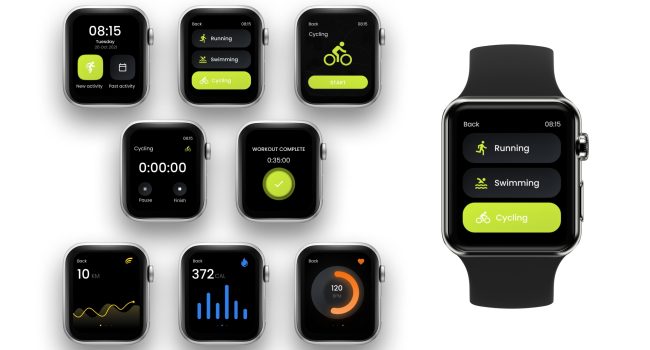
Using blockchain with wearable IoT devices is one of its most remarkable features. Blockchain technology can provide a fast, secure, and authenticated platform for integrating data with wearables such as activity trackers, fitness monitors, and health monitors. Physicians and other medical professionals have access to this updated and protected data, just like patients do. That allows physicians to readily monitor patients’ health status at any time. Because wearable device usage is increasing daily, you need to concentrate on developing a unique healthcare app.
- Verification of Medical Staff Credentials
Medical specialists’ credentials and experience are also tracked via the blockchain ledger. It makes it simple to monitor and validate degrees and expertise by enabling top healthcare organisations to keep track of employees’ credentials. These systems are already in place; one of several instances is the R3 Corda blockchain-based US ProCredEx credential verification system.
- IoT Security for Remote Monitoring
One important application of blockchain in healthcare is in remote monitoring technologies. These devices allow medical personnel to receive more information about a patient’s health-related data in addition to taking their vital signs remotely. It is one of the biggest advancements in the healthcare sector at the moment, allowing for more pro-active and preventive care.
- Insurance and Supply Chain Settlements
Blockchain is most typically utilized in insurance and supply chain settlements. Many companies offer blockchain-based identity validation systems that simplify the process for various organizations, such as insurance companies, clinics, pharmaceutical companies, and makers of medical devices. These identities might be used to track service transactions, keep track of contract details, and manage product and service payment settlements. Trading partners and insurance companies can operate on totally digital and, in certain cases, automated contract conditions thanks to blockchain-based ecosystems.
Conclusion
About 70% of healthcare organizations, according to IBM, think that a key benefit of introducing blockchain technology into the healthcare sector would be improved clinical trial management. Data security, high-quality care, and more practical and efficient payment methods are all necessary for AI software development in the healthcare industry. As a result, blockchain provides access to store, share, and manage data, which is crucial for the industry’s operations and fixes the majority of these issues.