Because edge servers are localized, computing power can be situated in closer proximity to data sources. These servers drastically cut down on the latency that would otherwise arise from transferring data to a central server or data center by processing data close to the source. Additionally, this proximity reduces bandwidth consumption and boosts the overall effectiveness of the network. This article will examine the architecture of an edge network and how its many parts functions in a tiered structure to facilitate effective service delivery and data processing.
Finally, edge networks require security methods as a fundamental component. These can include intrusion detection systems, firewalls, and encryption software to protect the network from possible online attacks and guarantee data integrity and confidentiality.
Software Components
While software components are the unsung heroes powering an edge network’s operations, hardware makes up the network’s physical components. Network management software and virtual network functions (VNFs) are two essential pieces of software in an edge network.
Network devices can be configured, observed, and troubleshooted with the use of network management software.
VNFs signify a change in the way network services are provided. Many network functions were formerly dependent on hardware components. By separating these services from the hardware, VNFs enable software to operate on a range of commodity hardware platforms.
Architecture of an Edge Network
A layered architecture is used in edge networking, where each layer performs a particular task and communicates with other layers to process and deliver services more efficiently.
Data Sources Layer
Various edge devices that gather data make up this layer, which is often referred to as the device layer and forms the base of the edge network. These gadgets, which include sensors, actuators, and Internet of Things devices, can produce a wide range of data, from human interactions to readings about the surroundings. Once locally handled, this data is forwarded to the following layer for additional processing.
Edge Computing Layer
The edge computing layer is the next layer in an edge network where most data processing occurs. It comprises edge servers that, by placing processing power adjacent to data sources, reduce latency and bandwidth requirements. To safeguard the network and its data from potential cyber threats, security methods may also be included in the edge computing layer.
Services Layer
After processing, the data is routed to the service layer, which oversees overseeing edge network services including analytics, hosting, and data storage. To provide network services in a flexible manner, the service layer may also incorporate virtual network functions.
Application Layer
Ultimately, the application layer receives the services and data that have been processed. By directly interacting with the end users, this layer delivers the information or services they have requested. Depending on the particular use case, applications might range from straightforward data visualization tools to intricate machine learning techniques.
An edge network’s ability to operate depends on each of these tiers.
| Layer | Example Components |
| Data source layer | Sensors, IoT devices, actuators |
| Edge computing layer | Edge servers, firewalls, intrusion detection systems |
| Service layer | Data storage systems, analytics tools, VNFs |
| Application layer | Data visualization tools, machine learning algorithms, user applications |
The subsequent sections will delve into the ways in which edge networks engage with cloud services and go over particular applications of edge networking across different sectors.
Cloud Services and Edge Networking
Cloud-based services’ data processing and interaction methods are revolutionized by edge networking. By moving processing closer to the data-generating and data-using devices, it reduces the amount of data that needs to be sent to cloud services for processing.
The application of edge computing in content delivery networks (CDNs) is a prime illustration of this. CDNs are an essential component of the internet since they provide web content to end consumers. CDNs may cache and serve content closer to the user with edge computing, which speeds up content delivery and greatly improves user experience.
Edge Networking Use Cases
Edge networking is being used by a variety of applications and sectors to improve operations and services.
Healthcare

Edge networking makes remote robotic surgery, telemedicine, and real-time patient monitoring possible. Wearable technology, for instance, can monitor a patient’s vitals in real time. By processing this data locally, edge computing can handle major changes quickly and free up the core network to do other important tasks.
An IDC survey conducted in September 2020 found that 31% of healthcare organizations use edge technologies primarily for data exchange and security. Additionally, an infographic from Dell Technologies was published in the MIT Technology Review, indicating that by 2025, the edge would produce 75% of medical data.
Manufacturing
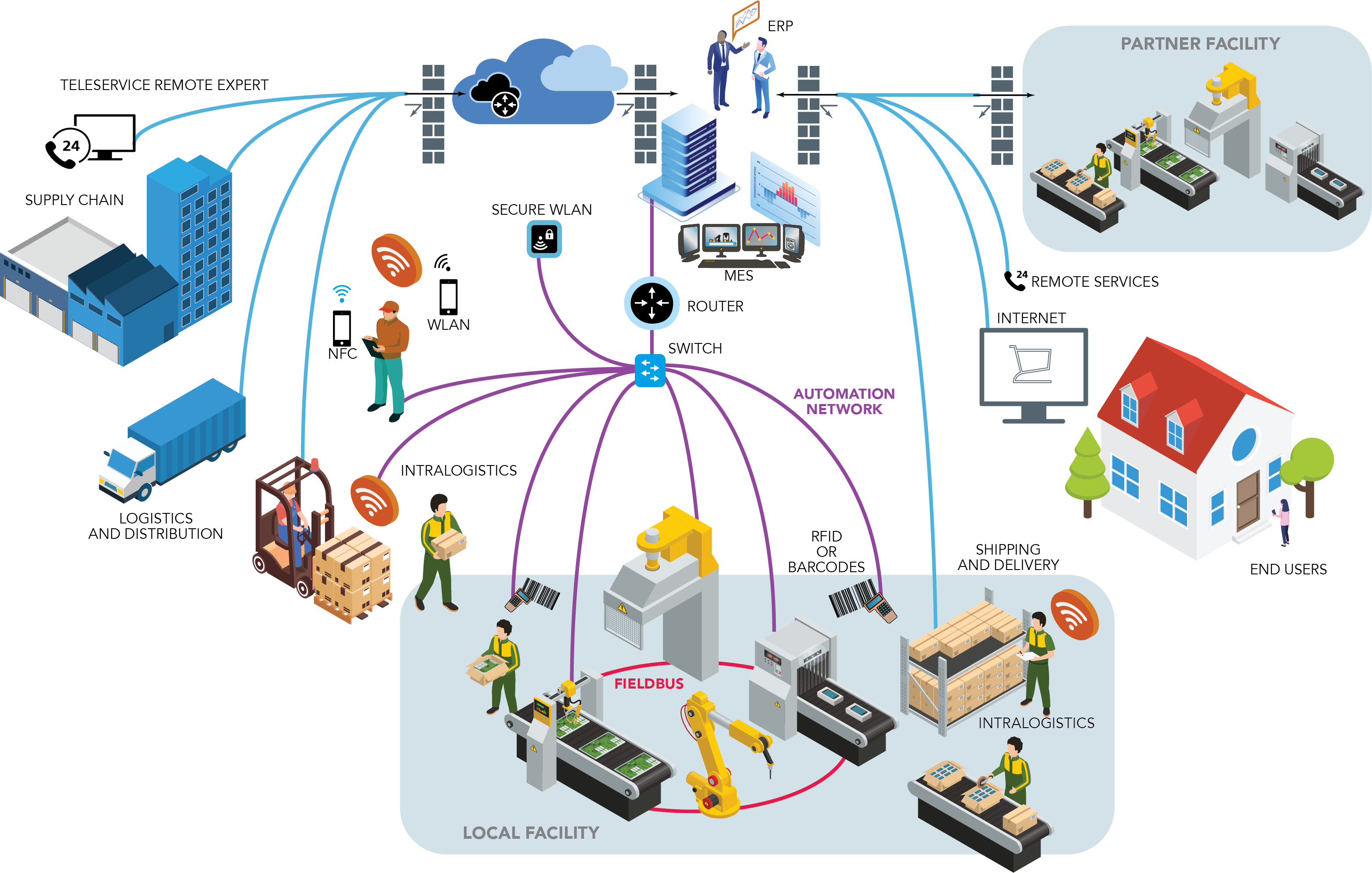
Edge networking is used by businesses in this industry to increase production line efficiency. Real-time quality control and predictive maintenance are made possible by industrial IoT devices equipped with a variety of sensors that can collect and interpret data at the edge.
The edge computing industry is expected to grow at a compound annual growth rate (CAGR) of 15.7% from $53.6 billion in 2023 to $111.3 billion by 2028. To achieve more intelligent operations, a strong 91% of CEOs in the manufacturing sector want to invest in digital factories. IDC projects that the use of edge IoT and OT cybersecurity solutions will skyrocket by 2027, with about half of firms implementing these technologies.
Entertainment
Edge networking has a major positive impact on the entertainment sector as well, especially on streaming services and online gaming. These services are able to provide smooth, high-quality experiences by serving material from edge servers that are located closer to the user.
According to a VOLTA data center survey, 38% of small firms have adopted edge computing, taking advantage of the increased speed and bandwidth provided by 5G to get the advantages of cloud and edge computing together. Additionally, it is projected that the addressable market for edge computing would reach $445 billion by 2030, indicating a significant potential increase in the number of users for online gaming and streaming.
Multi-Location Companies/Remote Workers
Edge networking can be used by businesses with many remote workers or different locations to guarantee continuous connectivity and better application performance. SaaS business apps, for instance, can operate more productively and with less latency on edge servers.
According to Forbes Advisor, in 2023, 12.7% of full-time employees chose a work-from-home model, while 28.2% chose a hybrid strategy. Moreover, a noteworthy 98% of employees express a desire to work remotely at least sometimes. As the number of employees working remotely rises, edge computing services must reach out to workers’ homes.
Future of Edge Networking
Edge networking has a lot of exciting things in store for the future. Edge networking can enable higher-bandwidth, lower-latency applications with the incorporation of 5G technology, enabling immersive and real-time experiences.
Another interesting breakthrough is the integration of machine learning (ML) and artificial intelligence (AI) with edge networking. AI/ML models provide fast, effective data processing when they are executed locally on devices. Applications for this are numerous and include streaming analytics, AI-powered personal assistants on smartphones, and predictive analytics in the manufacturing industry.
But it’s important to understand that edge computing is still a developing technology with issues that need to be resolved. Organizations trying to take use of this technology often struggle with standardizing edge-computing systems, managing the massive amounts of data generated, and ensuring edge security.
Notwithstanding these reservations, edge networking has a bright future. The importance of edge computing in the process of digital transformation will only increase with the number of connected devices and the growing demand for real-time processing.
XR Studios assist business
Thanks to our parent company Cox Business’s cutting-edge connectivity and our array of cloud services such as SD-WAN, SASE, M365, and public cloud solutions, XR Studios is in a unique position to assist businesses of all kinds in discovering the advantages of edge networking. Get in touch with us right now to find out more about how our professionals can help you harness the edge’s potential to increase the productivity and agility of your company.
Conclusion
Edge networking, which offers ways to lower latency, boost speed, and deliver a more seamless user experience, is completely changing the way we engage with technology. Along with more well-established resources like SaaS applications and cloud service utilization, it is playing a crucial role in enabling technologies like driverless vehicles, IoT apps, and content delivery networks.