If you’re a tech geek or in the IT industry, you’ve undoubtedly heard of “API.” API development has never been more important to the economy as they are today. They are ubiquitous. In our daily lives, we often use API software for a variety of purposes, including buying tickets, accessing Facebook, and making PayPal payments.
The world of APIs is enormous, and you may design an API to meet your company goals if you work with an app development agency.
What is an API?
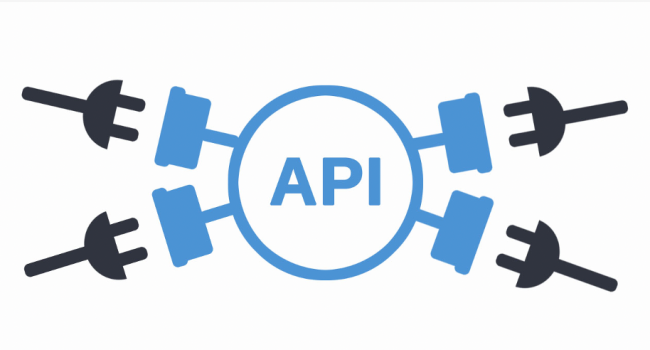
An application (or software) can leverage the features or services of another application, device, or platform to deliver better services through the usage of APIs (application programming interfaces), which are a collection of rules, specifications, and standards. Technically speaking, it’s a group of programming codes known as APIs that allow data to be transferred between two software programmes. It also covers the terms of the data exchange.
What are the Types of APIs?
Release policies can be used to categorize API technologies.
- Private APIs
The interfaces of this programme are designed to improve the company’s internal services and API solutions. These APIs can be used to build new systems by contractors as well as in-house developers. The app’s interface is only accessible to those who are employed by the API publisher or an Android app development company, even if it is made publicly available. The company can completely control API usage by taking a private strategy.
- Partner APIs
Partner APIs are used to implement API integration between two parties. They are also made available to the general public and shared with business associates that have signed a contract with the publisher. Giving its partners access to data and capabilities can help a corporation generate more revenue.
It can keep an eye on the usage of exposed digital assets in the interim. It also confirms that the apps maintain the company’s identity and that the third-party API integration services utilising its APIs offer a satisfactory user experience.
- Public APIs
External or developer-facing APIs are additional terms for public APIs. These APIs are also accessible to other developers. The Public API programme may help you increase brand recognition. It also gives you the opportunity to make extra money if done properly. Furthermore, there are two categories of public APIs: open APIs and commercial APIs.
The Open API states that all of its features are open to the public and that there are no limitations on usage. It also stipulates that the specification of the API and any related documentation must be available. It goes on to say that applications and testing ought to be freely available.
Clients of commercial APIs can choose to access the services on a pay-per-use basis or by paying a monthly membership fee. Furthermore, free trials are provided by publications or iPhone app development services so users can evaluate APIs before committing to a subscription.
- Composite API
Multiple services, data sets, and APIs are combined in the composite APIs. They are made by combining pre-existing API methods that can do multiple tasks in a single call. This expedites execution and enhances listener performance in web interfaces.
An Insight into Operational Dynamics
To assist you understand how the API works, let’s have a look at an example. You have gone to the ABC website or app to book a trip. You completed the form completely, entering the flight information, the city, the date of departure and arrival, and any other relevant details.
A list of flights with details on schedule, pricing, seat availability, and many other factors will show up after submission. But how did this come about? The APIs are to blame for this.
By requesting such exact data from the website, the platform makes it possible for it to access the database and get all relevant data using an API. In response, the data that was sent via API to the platform is shown on the webpage.
The data-sharing process was expedited in this instance by the API’s function as a middleman. On the other hand, the airline website and the travel booking platform act as the endpoints. There are two ways that APIs can interact with endpoints: REST and SOAP.
Now that we know how APIs function, let’s look at some common terms used in API development.
Key Terminology in API Development: Understanding Essential Concepts
If you want custom API development, you need to be familiar with the words listed below.
1. API Key
To authenticate a user, developer, or calling programme, a unique code is provided through computer programmes.
2. Endpoint
The points of contact between a server and an API are called endpoints.
3. JSON
APIs use JSON (JavaScript Object Notion) to exchange data. A web application and a server, or two programmes, could communicate data in this way.
4. GET
It’s a method for getting data from a certain server resource.
5. POST
This method involves sending data to the API server in order to create or update resources.
6. OAuth
It is an open-standard API authorization framework that, without the need for a password, allows programmes or other websites safe and restricted access to end users’ data.
7. Latency
The amount of time an API takes to process a request and reply is known as latency.
8. Rate-limiting
Controlling the rates of both inbound and outbound traffic is known as rate-limiting. It may also refer to the total number of requests a user submits to the API.
9. API throttling
When consumers’ use of APIs is restricted for a certain period of time, it’s known as API throttling.
Key Tools for Effective API Development
When it comes to creating APIs, there are numerous tools available. The most well-known goods and innovations that AI development services utilise to provide APIs include the following:
- Apigee
Apigee is the name of Google’s development management tool for APIs. When a company wishes to upgrade its outdated apps or improve data flow across apps and services, this solution comes in helpful. Developers can use it to construct connected apps as well.
- Dredd
A framework for testing HTTP APIs is called Dredd. It is used to confirm the description provided by the backend API. It also thoroughly reviews the API’s description and assesses if it has been validated. For increased productivity, a specialised backend development business may simply validate the Dredd framework.
- APIMatic
APIMatic is a platform that facilitates developer interactions with website APIs. It is used by developers to build SDKs for their APIs on ten different platforms. It also fulfils the function of keeping synchronisation with API modifications.
This utility also allows developers to convert API descriptions into IO Docs, API Blueprint, HAR 1.4, RAML, OAI format, WADL, Postman collections, Swagger, and more formats.
- Sandbox
Using API definitions, Sandbox offers a quick and easy approach to simulate a RESTful API. It also reduces the cost and risk associated with interacting with external APIs during testing.
- Postman
Mobile application developers can evaluate the functionality of their applications by testing and documenting the API using Postman, an interactive tool with automatic settings.
- SoapUI
SoapUI is an open-source testing tool. It works with many platforms. It can also automate testing, both functional and non-functional. It runs security, load, regression, compliance, and Web API tests.
- Swagger
APIs are created using the open-source Swagger framework. Swagger is used by well-known businesses including Microsoft, PayPal, Apigee, and GettyImages.
- JMeter
The software JMeter is open-source. It is used for performance testing of RESTful APIs.
XR Studios excel in building APIs
At XR Studios, development team is made up of passionate engineers that have a track record of building amazing APIs. So why wait? Get in touch with us to start creating your API!
Conclusion
It’s fair to argue that software development and corporate cooperation now heavily rely on APIs. It has been shown that by enabling the required technological connectivity, APIs raise business profits. You can also design and implement the necessary API for your company.
You should now have a solid understanding of APIs, their uses, and how to design a great API for your company after reading this post. For the purpose of creating an API for your business or product, you can use offshore developers.