Augmented reality (AR) is leaving its mark in the realm of dental care, changing how both dentists and patients experience oral health in the ever-evolving world of dental care technology. The dental field has found extensive use for augmented reality (AR), a technology that improves patient education, diagnosis, and treatment planning by superimposing digital information on the physical world. This article will explore the field of augmented reality in dental treatment, examining its advantages and technological advancements before concluding with a case study that illustrates its potential.
The Power of Augmented Reality in Dentistry
Enhanced Diagnostics:
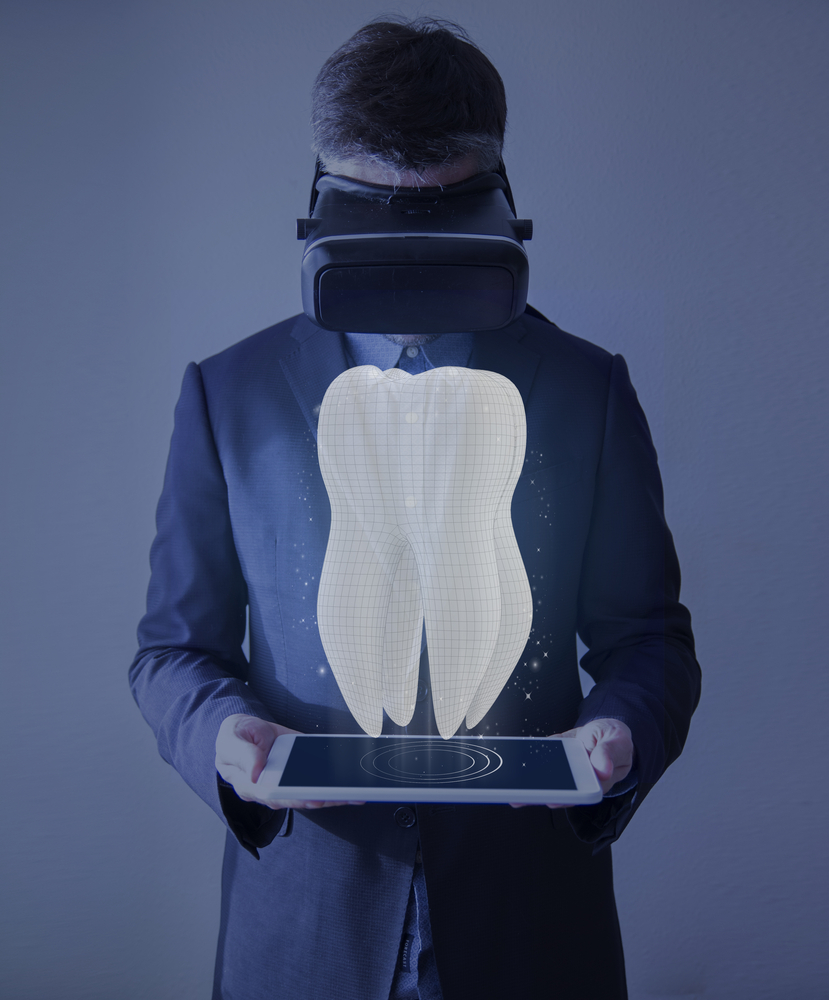
Diagnostics is one of the main areas where AR is changing dental treatment. X-rays are a common stay of conventional dental examination techniques, but they may be painful for patients and time-consuming for dentists. On the other hand, AR-based diagnostic tools enable non-invasive and thorough tests. For instance, using AR dental apps, a dentist can project a 3D model of a patient’s teeth onto a screen, allowing them to examine the patient’s mouth from different perspectives and zoom in with previously unheard-of precision on particular problem areas.
Treatment Planning:
The way dentists plan and carry out procedures has been revolutionized by augmented reality. Dental professionals can more accurately construct individualized treatment plans with the use of AR systems since they integrate patient data and available treatments. Dentists are now able to visualize the outcome of different treatments by superimposing virtual overlays over a patient’s real-time dental scans. This helps patients better comprehend their treatment alternatives while also improving the dentist’s decision-making process.
Patient Education:
Effectively explaining diagnosis and treatment plans to patients is one of the challenges in dental care. By giving patients a visual and interactive understanding of their dental health, augmented reality fills in this gap. Dental professionals can utilize augmented reality (AR) to engage and educate patients about their dental scans and treatment options. This improves patient involvement and promotes informed choice.
What is AR-based Dental Implant Surgery?
Augmented reality technology is included in the design and performance of dental implant treatments in AR-based dental implant surgery. It gives dentists a thorough and extremely accurate view of the patient’s oral anatomy by fusing real-world images with computer-generated data. This is how it goes:
3D imaging:
A 3D scan of the patient’s mouth is performed prior to surgery. By using this scan to produce a precise digital reproduction of the mouth cavity, the dentist is able to meticulously design the implant operation.
Virtual Overlay:
During the procedure, the dentist can view a virtual overlay of the patient’s mouth using augmented reality (AR) glasses or a headset. Important details including the locations of blood vessels, nerves, and anticipated implant sites are shown in this overlay.
Precision Guidance:
AR technology gives the dentist in-the-moment direction, assuring that the implant is positioned precisely where it should be and at the right angle. This reduces the possibility of mistakes and difficulties.
Benefits of Dental Implant Surgery Based on AR
Enhanced Precision:
AR technology enables exceptional precision during surgery, lowering risk and guaranteeing that the implant is positioned correctly. Procedures are completed more quickly because dentists have quick access to all the information they need. This may result in quicker surgeries and less pain for the patients. Decreased post-operative pain and quicker recovery times all contribute to an improved patient experience. Fewer follow-up visits and a lower risk of complications are also benefits of AR-based surgery because of its precision.
Enhanced Education:
Dental students may find AR-based implant surgery to be an effective teaching tool. It offers a simple and engaging method to learn about oral anatomy and implant processes.
Long-Term Advantages Because the implants are more likely to properly Osseo integrate with the patient’s bone structure because to AR-based surgery’s precision, better long-term outcomes may result.
XR Studios: Pioneering Augmented Reality in Healthcare
Innovative companies like XR Studios are at the forefront of developing augmented reality uses specifically suited for healthcare applications. The huge potential of augmented reality to improve patient care and the effectiveness of medical staff is recognized by XR Studios. Their ongoing research and development show their commitment to raising the bar for AR in dental care and other healthcare disciplines.
By focusing on healthcare applications, XR Studios hopes to provide dentists and other healthcare professionals with cutting-edge augmented reality solutions for diagnosis, treatment planning, and patient education. Their dedication to this endeavor lends credence to the notion that augmented reality has the ability to fundamentally alter how healthcare is delivered and experienced.
Conclusion
Augmented reality in dental care, which was once only a sci-fi concept, is already transforming how oral health is managed. Everything from better diagnosis to individualized treatment planning and patient education is being significantly impacted by AR. Examples from real-world situations, such as the use of augmented reality during dental implant surgery, highlight the benefits that patients and dentists can actually enjoy. Businesses like XR Studios are leading the charge in pushing the boundaries of augmented reality in healthcare with a focus on developing cutting-edge solutions that improve patient care. As augmented reality advances, it has the potential to revolutionize not just dental care but the entire healthcare sector. The future of healthcare is looking more and more hopeful thanks to AR.