When it comes to marketing strategy, one of the biggest challenges is figuring out which of the many market segments to target, what prices and promotions to use, and how to coordinate mass media communications in order to increase sales and improve brand profitability. In this ever-changing environment, mobile loyalty programs—which are especially common in the quick-service restaurant (QSR) industry—become essential tools for brands.
Traditional mass media channels and generic marketing gimmicks have become obsolete in today’s digital environment. Maintaining a significant presence requires communicating directly with customers and having a deep understanding of their interests. Examining the effects of mobile loyalty programs on the customer journey—especially with regard to retention—becomes essential as marketing paradigms shift towards personalized approaches and QSR technology takes center stage.
Marketing strategists are forced by the progress of the field to shift from broad strokes to precision targeting, customizing interactions to the preferences and behaviors of specific individual consumers. Because loyalty programs are inherently scalable and encourage participation through rewards, they play a crucial role in bridging the gap between companies and their customers. Mobile-centric loyalty programs provide a smooth way to build enduring relationships with customers in the QSR industry, where speed and convenience are crucial.
Brands may gain significant insights into consumer behaviors and preferences by utilizing mobile platforms, which help streamline the user experience. As a result, marketers are better equipped to create hyper-targeted advertisements and promotional offers, which improve customer retention and promote long-term profitability.
In summary, the current state of marketing necessitates a shift away from traditional mass media methods and towards more individualized, tech-enabled techniques. In the fast-paced world of quick-service restaurants, mobile loyalty programs are a key component of consumer engagement and retention, and they serve as a witness to this change.
The Benefits of Mobile Loyalty Programs
Numerous benefits make mobile loyalty programs an essential tactic for contemporary organizations. The main change is that they are now concentrating on cultivating customer loyalty instead of revenue augmentation. In the quick service restaurant industry, in particular, the focus has shifted from lead generation and conversion to maintaining long-term relationships with loyal customers in order to capture a greater share of their spending.
It’s critical to understand that, even though technology facilitates, the main goal is still attracting and keeping clients. Whatever the level of technological advancement, building a devoted customer base is still the ultimate objective. In today’s world, a successful business is characterized by its capacity to optimize the lifetime worth of its clientele. The unparalleled degree of one-on-one engagement that businesses have with their clients, enabled by technological improvements, is driving this paradigm change.
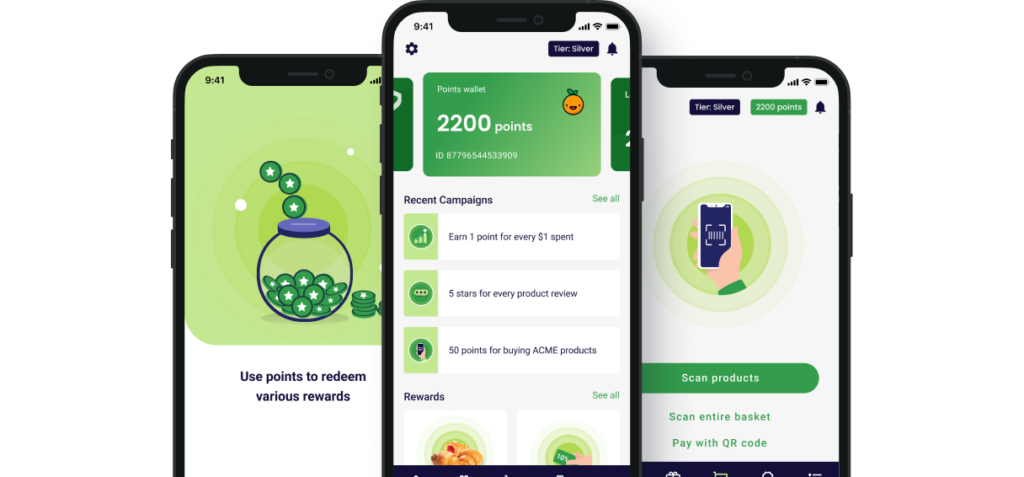
Fundamentally, mobile loyalty programs serve as a channel for ongoing interaction by providing individualized experiences based on user choices. Businesses can strengthen the relationship between their brand and customers by offering tailored incentives and rewards by utilizing data analytics and consumer insights. As a result, loyalty goes beyond simple exchanges and develops into a win-win partnership marked by reciprocity and trust.
How Is the Customer Journey Affected?
Online shopping has become an essential part of daily life in the digital age due to its unmatched accessibility and convenience. But it frequently lacks the customized experience that a lot of people want. The days of lazy afternoons spent browsing the aisles of a busy mall are long gone, when amiable salespeople would excitedly show off their best picks and create a feeling of community among patrons.
Online shopping, in contrast, might appear impersonal. However, it aims to close this gap by putting loyalty programs into place. These programs use cutting-edge technology to please customers with personalized recommendations in addition to satisfying their preferences. These algorithms establish a feeling of familiarity and connection by examining previous purchases and browsing patterns; the result is a similar experience to building a rapport with a reliable salesman.
Loyalty programs, in short, mitigate the inherent separation of online shopping by bringing a sense of warmth and connection to the encounter. By creating a sense of community and belonging, they temporarily capture the charming allure of boutique shopping. Adding a personal touch not only increases client happiness but also fosters repeat business and loyalty.
Why Is Customer Retention Important for the Quick Service Restaurant Industry?
The strategies a company uses to convert clients into devoted customers are referred to as customer retention. A flourishing enterprise needs to maintain its initial clientele and guarantee them repeat business. Optimizing the lifetime value (LTV) of consumers is essential for maintaining client loyalty. According to studies, a just 5% improvement in client retention rates can boost a company’s profitability from 25 to 95%.
This is particularly valid in situations where marketplaces are saturated. In the quick-service restaurant industry, keeping customers is more crucial than anything else. This is why a lot of prosperous food chains have their own mobile applications and loyalty schemes.
Helps in Learning more about your customers
As far as business owners are concerned, not much else can mine data as effectively as loyalty programs. The ideal tale for client retention is a thorough explanation of what customers are purchasing, what interests them, and the conditions around their purchases. Tesco, a UK-based retailer, tracked what customers were purchasing and which stores they frequented using its Clubcard program, which delivers targeted coupons, in order to supply locally tailored items. The research “Rethinking Marketing,” HBR January–February 2010, found that in addition to purchasing a lot of diapers, new fathers also purchased a lot of beer. The study linked this to the fact that they were unable to go out and have a night out.
Apart from the requirement for clients to invest in loyalty programs, which forces them to fully utilize a certain app. Loyalty programs encourage “loyalty” to a brand by mining customer data over extended periods of time and using it to offer customers more value than they otherwise could.
Programs that reward loyalty gather data on a person’s age, gender, marital status, number of dependents, address, income, hobbies, way of life, and even purchasing habits. A brand can outperform its competitors thanks to the sheer volume of data they gather. Loyalty programs offer companies a sample to try their marketing efforts on in addition to being a valuable tool for gathering and analyzing large amounts of data.
What Can We Learn from This?
Personalized service and incentives are like catnip to consumers in this day and age. We’ve all been guilty of falling for the allure of gift cards and coupons, but when you combine that with the ease of QSR technology—which offers tailored promotions, exclusive deals, and a visually appealing interface—customer retention rates can skyrocket.
Retaining customers has always been essential to a business’s success. The aggressive marketing trends driven by the quick digitization process and the advent of low-cost, easily available technology have only served to highlight the vacuous character of traditional marketing initiatives, which have as their sole goal acquiring new clients rather than retaining existing ones.
XR Studios and mobile Loyalty Programs
At XR Studios, we recognize the value of QSR technology and mobile loyalty programs because they let us return to the fundamentals of business: knowing and meeting your consumers’ requirements.
Look no further than XR Studios if you’re looking for an e-commerce mobile app development company that can put your business at your consumers’ fingertips. They have the know-how and inventiveness to build and create cutting-edge mobile e-commerce apps that are especially suited to your e-commerce requirements thanks to their talented staff of developers. XR Studios helps turn your e-commerce idea become a reality, from user-friendly interfaces to smooth payment integration.